The Silent Revolution: Why Business Automation is a Game-Changer
In today’s fast-paced business landscape, companies that fail to adapt risk being left behind. Yet, the most transformative shifts often happen quietly—through the adoption of business automation. Unlike the dramatic disruptions of new technologies or market upheavals, automation works behind the scenes, streamlining processes, eliminating redundancies, and freeing up human talent for higher-value work. It’s not about replacing employees but empowering them to focus on innovation, creativity, and strategic decision-making. When implemented thoughtfully, automation can transform a company overnight, turning inefficiencies into competitive advantages. The question isn’t whether your business can afford to automate—it’s whether it can afford *not* to.
Consider a scenario where a mid-sized company spends 40% of its operational budget on repetitive tasks like data entry, invoice processing, or customer inquiries. These tasks, while necessary, drain resources and slow down growth. Automation tools, from robotic process automation (RPA) to workflow management software, can handle these functions with precision and speed, reducing errors and cutting costs by up to 30%. The result? A leaner, more agile organization that can respond to market demands in real time. This isn’t just incremental improvement—it’s a fundamental reimagining of how work gets done.
Breaking Down the Automation Revolution: Key Areas of Impact
Automation isn’t a one-size-fits-all solution. Its power lies in its ability to integrate seamlessly across various business functions, each yielding unique benefits. Let’s explore the most impactful areas where automation is driving transformation:
The Backbone: Automating Repetitive and Manual Processes
Every business has them: the tedious, time-consuming tasks that no one enjoys but that are essential to operations. Whether it’s processing payroll, reconciling accounts, or managing inventory, these processes are prime candidates for automation. Tools like RPA (Robotic Process Automation) can mimic human actions to execute rules-based tasks with near-perfect accuracy. For example, a manufacturing company might automate its supply chain management, ensuring that stock levels are maintained without manual intervention. The impact is immediate: fewer errors, faster turnaround times, and employees who can redirect their energy toward problem-solving and customer engagement.
Beyond RPA, workflow automation platforms like Zapier, Make (formerly Integromat), and Microsoft Power Automate connect disparate systems—such as CRM, ERP, and email marketing tools—to create seamless, end-to-end processes. Imagine a customer placing an order: automation can trigger inventory updates, send confirmation emails, update accounting records, and even schedule delivery—all without a single manual step. This level of automation doesn’t just save time; it enhances the customer experience by delivering faster, more consistent service.
Customer Experience: The Automation Advantage
In a world where customer expectations are higher than ever, automation is the key to delivering personalized, responsive service at scale. Chatbots and AI-driven customer support have become staples for businesses looking to provide 24/7 assistance. These tools can handle routine inquiries, troubleshoot common issues, and even escalate complex problems to human agents—all while reducing response times from hours to seconds. For instance, a telecommunications company might deploy a chatbot to resolve billing disputes or guide users through setup, freeing up human agents to focus on retention and upselling.
Automation also shines in personalization and marketing. Tools like HubSpot, ActiveCampaign, and Salesforce Marketing Cloud use automation to segment audiences, tailor messaging, and nurture leads based on behavior. A retail company might automate abandoned cart emails, sending dynamic discounts to customers who leave items in their online cart. The result? Higher conversion rates and a more engaging customer journey. By automating these touchpoints, businesses can build stronger relationships without increasing their workforce.
Data: Turning Information into Insights
Data is often called the “new oil,” but its true value lies in how it’s used. Unfortunately, many companies drown in data while starving for insights. Automation helps bridge this gap by collecting, analyzing, and visualizing data in real time. Tools like Tableau, Power BI, and Google Data Studio can automate the generation of reports, dashboards, and alerts, ensuring that decision-makers always have the latest information at their fingertips.
On a deeper level, AI and machine learning can uncover patterns that human analysts might miss. For example, a financial services firm might use AI to detect fraudulent transactions by analyzing spending patterns in real time. Or a healthcare provider could automate patient data analysis to identify at-risk individuals and intervene early. Automation doesn’t just process data faster—it transforms raw information into actionable intelligence, giving businesses the clarity they need to stay ahead.
Human Resources: Streamlining Talent Management
HR departments are often bogged down by administrative tasks, from onboarding new hires to managing leave requests. Automation can revolutionize these processes, making HR teams more strategic and employee experiences more seamless. HR automation tools like BambooHR, Workday, and Gusto can handle everything from payroll processing to performance reviews, reducing paperwork and minimizing errors.
One of the most impactful applications is automated recruitment. Tools like Pymetrics and HireVue use AI to screen resumes, schedule interviews, and even conduct preliminary assessments, drastically reducing the time-to-hire. For existing employees, automation can streamline benefits enrollment, time-off requests, and career development tracking. The result is a more engaged workforce and an HR department that acts as a growth enabler rather than a paperwork processor.
The Domino Effect: How Automation Creates Ripples of Change
Automation doesn’t just improve individual processes—it creates a ripple effect that transforms the entire organization. Here’s how:
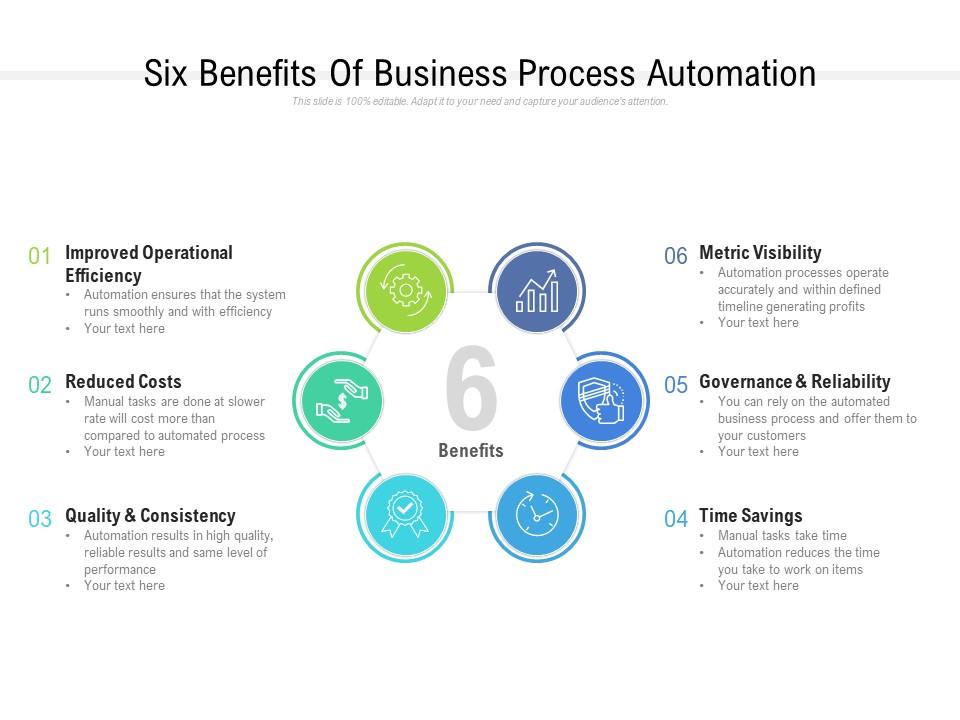
- Cost Savings: By reducing manual labor and minimizing errors, automation slashes operational costs. A study by McKinsey found that automation can deliver a 20-30% reduction in costs for repetitive tasks.
- Scalability: Automated processes can handle increased workloads without proportional increases in staff or resources. This is critical for businesses looking to grow without incurring crippling overhead.
- Compliance and Risk Management: Automation ensures that tasks are performed consistently and in line with regulations, reducing the risk of costly compliance violations. For example, automated auditing tools can flag discrepancies in financial records before they escalate.
- Employee Satisfaction: When employees are freed from mundane tasks, they can focus on meaningful work, leading to higher job satisfaction and lower turnover rates. A Gallup study found that companies with highly engaged teams see a 21% increase in profitability.
- Competitive Edge: In industries where margins are thin and customer expectations are ever-changing, automation provides the agility to innovate faster than competitors. Companies that automate early often gain a first-mover advantage in efficiency and customer experience.
Overcoming the Hurdles: Common Challenges and How to Navigate Them
Despite its clear benefits, automation adoption isn’t without challenges. Many businesses hesitate due to misconceptions, technical barriers, or resistance to change. Here’s how to address the most common obstacles:
Myth: Automation Will Replace Jobs
One of the biggest fears surrounding automation is that it will render human workers obsolete. In reality, automation is more likely to augment jobs rather than eliminate them. The World Economic Forum predicts that automation will create 12 million more jobs than it displaces by 2025. The key is to reskill employees for roles that require creativity, emotional intelligence, and strategic thinking—areas where humans excel. For example, a bank might automate transaction processing but retrain tellers to focus on financial advising and customer relationships.
Challenge: High Upfront Costs
Automation often requires an initial investment in software, training, and integration. However, the long-term ROI is typically substantial. To mitigate upfront costs, businesses can start small with pilot projects in high-impact areas, such as automating a single department’s workflows before scaling up. Many automation tools also offer subscription-based models, reducing the need for large capital expenditures. Additionally, governments and industry associations often provide grants or incentives for businesses adopting automation technologies.
Challenge: Integration with Legacy Systems
Older systems can be a barrier to automation, especially if they lack APIs or modern interfaces. The solution? Middleware and integration platforms like MuleSoft, Dell Boomi, or Apache Kafka can bridge the gap between legacy systems and new automation tools. For example, a manufacturing plant might use middleware to connect its outdated ERP system with a modern inventory management tool. Alternatively, businesses can phase out legacy systems gradually, replacing them with cloud-based solutions that are inherently more adaptable.
Resistance to Change
Human resistance is often the toughest hurdle to overcome. Employees may fear that automation will make their roles redundant or add complexity to their work. To address this, leadership must communicate a clear vision: automation is about empowerment, not replacement. Involve employees in the automation process from the start, asking for their input on which tasks to automate and how. Provide training and upskilling opportunities to ensure they feel confident in the new workflows. Celebrate early wins to build momentum and demonstrate the tangible benefits of automation.
From Theory to Action: A Step-by-Step Guide to Implementing Automation
Ready to transform your business with automation? Here’s a practical roadmap to guide your journey:
Step 1: Identify High-Impact Processes
Not all tasks are worth automating. Start by mapping out your current workflows and identifying the most time-consuming, error-prone, or repetitive processes. Tools like process mining software (e.g., Celonis or UiPath Process Mining) can analyze your existing workflows to pinpoint inefficiencies. Prioritize automation projects based on:
- Time Savings: How much manual effort can be eliminated?
- Cost Reduction: What are the financial benefits of automation?
- Error Reduction: How many mistakes are currently made in this process?
- Scalability: Can this process handle increased volume without additional resources?
Step 2: Choose the Right Tools
The automation market is vast, with solutions ranging from no-code platforms to enterprise-grade AI systems. Here’s a breakdown of the most popular categories:
- Robotic Process Automation (RPA): Tools like UiPath, Blue Prism, and Automation Anywhere for rule-based, repetitive tasks.
- Workflow Automation: Platforms like Zapier, Make, and Microsoft Power Automate for connecting apps and automating multi-step processes.
- AI and Machine Learning: Solutions like IBM Watson, Google Vertex AI, and Amazon SageMaker for predictive analytics and decision-making.
- Chatbots and Virtual Assistants: Tools like Drift, Intercom, and Tidio for customer service automation.
- HR and Payroll Automation: Software like BambooHR, Gusto, and Workday for talent management and payroll.
Select tools that align with your business needs, budget, and technical capabilities. Many vendors offer free trials or demos, so take advantage of these to test compatibility.
Step 3: Pilot, Test, and Iterate
Before rolling out automation company-wide, run a pilot program in a single department or process. This allows you to identify bugs, measure performance, and gather feedback from employees. For example, a sales team might automate lead qualification for a month to assess whether it improves conversion rates. Use metrics like time saved, error reduction, and employee satisfaction to evaluate success. Be prepared to iterate—automation isn’t a “set it and forget it” solution. Continuously refine processes based on real-world performance.
Step 4: Integrate and Scale
Once your pilot is successful, it’s time to integrate automation across departments and scale your efforts. This might involve:
- Connecting disparate systems (e.g., CRM, ERP, and accounting software) using APIs or middleware.
- Training employees on new tools and workflows through workshops or e-learning platforms.
- Establishing clear governance policies to ensure automation aligns with business goals and compliance requirements.
- Monitoring performance with KPIs like cost savings, productivity gains, and customer satisfaction scores.
Scaling automation doesn’t mean automating everything at once. Instead, prioritize high-impact areas and expand gradually, ensuring each phase delivers measurable value.
Step 5: Foster a Culture of Continuous Improvement
Automation isn’t a one-time project—it’s an ongoing journey. To sustain momentum, foster a culture that embraces innovation and continuous improvement. Encourage employees to propose new automation opportunities and recognize contributions that drive efficiency. Regularly review processes to identify emerging inefficiencies and stay updated on new automation tools and trends. Consider forming a center of excellence (CoE)—a dedicated team that oversees automation strategy, training, and best practices across the organization.
The Future is Automated: What’s Next for Business Workflows?
Automation is evolving at a breakneck pace, with new technologies poised to further revolutionize business workflows. Here’s a glimpse into what the future holds:
Hyperautomation: The Next Frontier
Hyperautomation takes automation to the next level by combining RPA, AI, machine learning, and process mining to automate entire workflows from start to finish. Unlike traditional automation, which focuses on individual tasks, hyperautomation aims to create end-to-end, autonomous processes. For example, a logistics company might use hyperautomation to automate order fulfillment, from customer order to warehouse picking, shipping, and delivery—with minimal human intervention. Gartner predicts that by 2024, organizations will lower operational costs by 30% through hyperautomation initiatives.
Low-Code/No-Code Platforms: Democratizing Automation
Not every business has a team of developers to build custom automation solutions. Low-code and no-code platforms are changing that by allowing non-technical users to create automation workflows with drag-and-drop interfaces. Tools like Airtable, Quick Base, and AppSheet empower employees to build apps and automations tailored to their specific needs without writing a single line of code. This democratization of automation accelerates innovation and reduces dependency on IT departments.
AI-Powered Decision Making
While automation excels at repetitive tasks, AI is transforming decision-making processes. Predictive analytics and AI-driven insights are enabling businesses to anticipate customer needs, optimize supply chains, and mitigate risks in real time. For example, a retail chain might use AI to predict which products will sell out during a promotion, automatically adjusting inventory levels to prevent stockouts. As AI becomes more sophisticated, its role in automation will expand, enabling businesses to make smarter, faster, and more data-driven decisions.
The Rise of Digital Workers
Imagine having an entire workforce of digital assistants that work around the clock, never make mistakes, and never need a break. Digital workers—AI-driven bots that perform complex, cognitive tasks—are becoming a reality. These bots can analyze contracts, draft emails, generate reports, and even participate in meetings by transcribing and summarizing discussions. Companies like Automation Anywhere and Microsoft are leading the charge in developing digital workers that can collaborate seamlessly with human teams. The result? A hybrid workforce where humans and machines work in harmony to achieve unprecedented efficiency.
Your Turn: Taking the First Step Toward Automation
Automation isn’t just a trend—it’s a fundamental shift in how businesses operate. The companies that thrive in the coming years will be those that embrace automation not as a cost-cutting measure, but as a strategic lever for growth, innovation, and customer satisfaction. The good news? You don’t need to overhaul your entire operation overnight. Start small, measure the impact, and scale what works. The transformation begins with a single step: identifying the first process to automate.
Ask yourself: What’s the most time-consuming, error-prone, or repetitive task in your business? Could it be automated with the right tools? If the answer is yes, then the revolution has already begun. The question isn’t whether automation will transform your company—it’s how soon you’ll start.
Start today. Your future self—and your bottom line—will thank you.