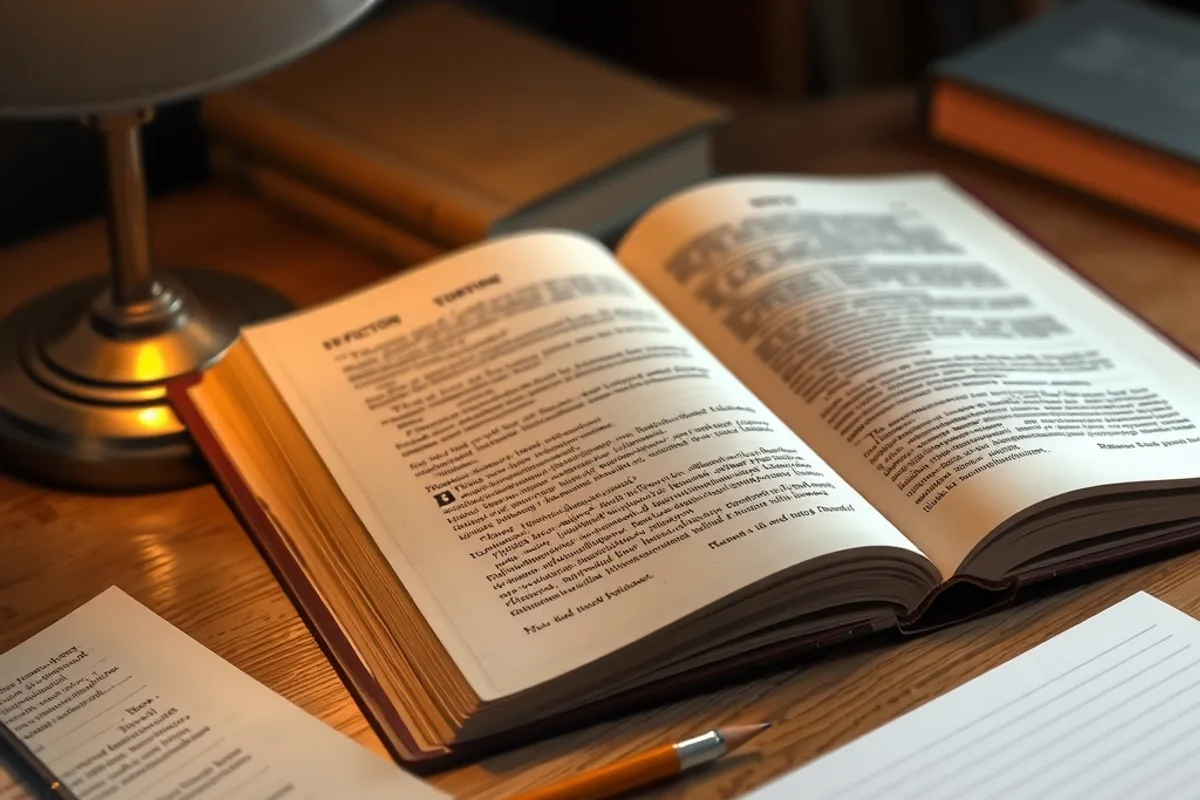
Open almost any nonfiction book that someone has read seriously and you will find the same thing: whole paragraphs shaded in fluorescent yellow, asterisks in the margin, a dog-eared page every twenty pages. It looks like evidence of engagement. Often it is evidence of a pleasant hour that left very little behind.
Highlighting is not useless, but it is a weak learning tool on its own. It marks text without requiring you to decide what it means, how it connects to anything else, or whether you agree. The effort that builds memory is the effort of reconstruction, and a highlighter does not ask for that.
Why highlighting feels so effective
The feeling is called fluency. When a sentence is easy to process, your brain treats ease as understanding. Colouring it in makes the page look familiar, and familiarity is easily mistaken for knowledge. A week later, the page is still yellow and the argument is gone.
This does not mean you should never mark a book. It means the mark should be a prompt for a later action — a question to answer, a claim to test, a passage to copy into your own words — rather than the action itself.
Read in three passes
The first pass is a scan: title, headings, first and last paragraphs, any figures. You are building a map, not absorbing detail. The second pass is the real read, slower, with a pen. The third pass is a short reconstruction from memory, ideally the next day.
The scan feels like cheating to people who were taught to read every word. It is not. Knowing the shape of an argument before you read it gives you places to attach the details. Without a map, details slide off.

Take notes you could argue with
A good note is not a transcript. It is a claim in your own words, plus the reason it matters, plus your response. Three lines are often enough: the author says X; the evidence is Y; I think Z because W.
That last part is what most notes omit. Without a response, the note is a storage box. With a response, it becomes a thought you can use in a conversation, a piece of writing or a decision. It also exposes the places where you did not actually understand the argument.
Keep one notebook, not twelve
Fragmented notes are almost impossible to review. A single notebook — paper or digital — with a date and the book title at the top of each entry is enough. Leave a wide margin for later comments. The margin is where the second reading happens.
If you read on an e-reader, resist the urge to export every highlight. Choose the ten passages that changed your mind or that you would want to quote, and write about each one. Ten processed passages beat four hundred highlighted ones.
Ask three questions at the end of a chapter
What was the central claim? What evidence carried it? What would change my mind? Answering these without looking back is a retrieval test. If you cannot answer, the chapter did not land, and you know exactly where to return.
For fiction, the questions differ: whose story is this, what changed, and what did the author leave unresolved? The principle is the same. Close the book and reconstruct before you move on.
A note is useful when it lets you disagree with the book a month later without opening it again.
Review at intervals, not constantly
Rereading notes every day is a comfortable way to avoid reading anything new. A better pattern is a short review after one day, another after a week and a third after a month. Each review should take minutes, not an afternoon: read the claim, cover the response, try to restate it.
Spaced review works because each return is slightly effortful. If the material is perfectly fresh, you are recognising, not recalling. Recognition is the skill you use in a multiple-choice test and lose in an interview.
Write the summary before you start the next book
A one-page summary forces choices: what mattered, what was weak, what you will do differently. It also creates a record you can return to when the details have gone. The summary should be written from the notes and memory, not copied from the jacket copy.
Over a year, those one-page summaries become a personal library of arguments. That is a far more valuable asset than a shelf of books with yellow pages and no index into your own thinking.

The bottom line
Stop treating marks on a page as proof of learning. Read in passes, close the book, reconstruct the argument, and write a note you could argue with. Review it at widening intervals and summarise each book before starting the next. The method is slower at the desk and much faster everywhere else.
If you are building a larger study plan, pair this with our framework for skills that stick. The same principles — retrieval, spacing and feedback — apply to every subject.