
The gym is full of advice written for people who are already strong. Start heavy, train to failure, add weight every session. For a forty-five-year-old who has not lifted since school, that advice is a reliable way to spend three days unable to sit down and two months avoiding the gym.
Strength training after 40 is not complicated, but it is less forgiving of stupidity. Recovery takes longer, joints have a longer history, and the calendar is usually fuller. The answer is not to train less ambitiously. It is to train with a plan that respects the cost of recovery.
Why strength matters more, not less
Muscle mass and bone density decline with age, and the decline accelerates if nothing resists it. Strength training improves the ability to carry groceries, climb stairs, get off the floor and recover from a stumble. It also supports metabolic health and mood, though the size of those effects depends on the person and the programme.
The goal is not a beach photo. It is a body that can still do ordinary things at seventy. That reframing makes the training less about punishment and more about maintenance.
Start with two sessions a week
Two full-body sessions with at least one rest day between them are enough for a beginner. Three is fine if recovery allows. More is not better at the start, because the first adaptation is not muscle — it is the nervous system learning the movements.
A simple session: a squat pattern, a hinge, a push, a pull and a carry. That could be a goblet squat, a Romanian deadlift with dumbbells, a push-up variation, a row and a farmer's carry. Two or three sets of each, eight to twelve reps, with a weight that leaves two or three good reps in reserve.

Lighter than you think, stricter than you like
Choose a weight you could lift for fifteen reps but stop at ten. This feels too easy for the first two weeks. That is the point. You are building a movement pattern and a habit, not testing your maximum. The ego lift is the one that ends the programme.
Film one set from the side. Most form problems are invisible from the inside. Check that the knees track over the toes, the back stays neutral and the weight moves through a full range you can control. If a joint hurts sharply, stop and get advice; muscle effort is fine, joint pain is not.
Progress by adding reps first
Do not add weight every session. Add reps until you reach the top of the range with good form, then add the smallest available increment and drop back to the bottom of the range. This is slower and much more sustainable than chasing a new personal best every week.
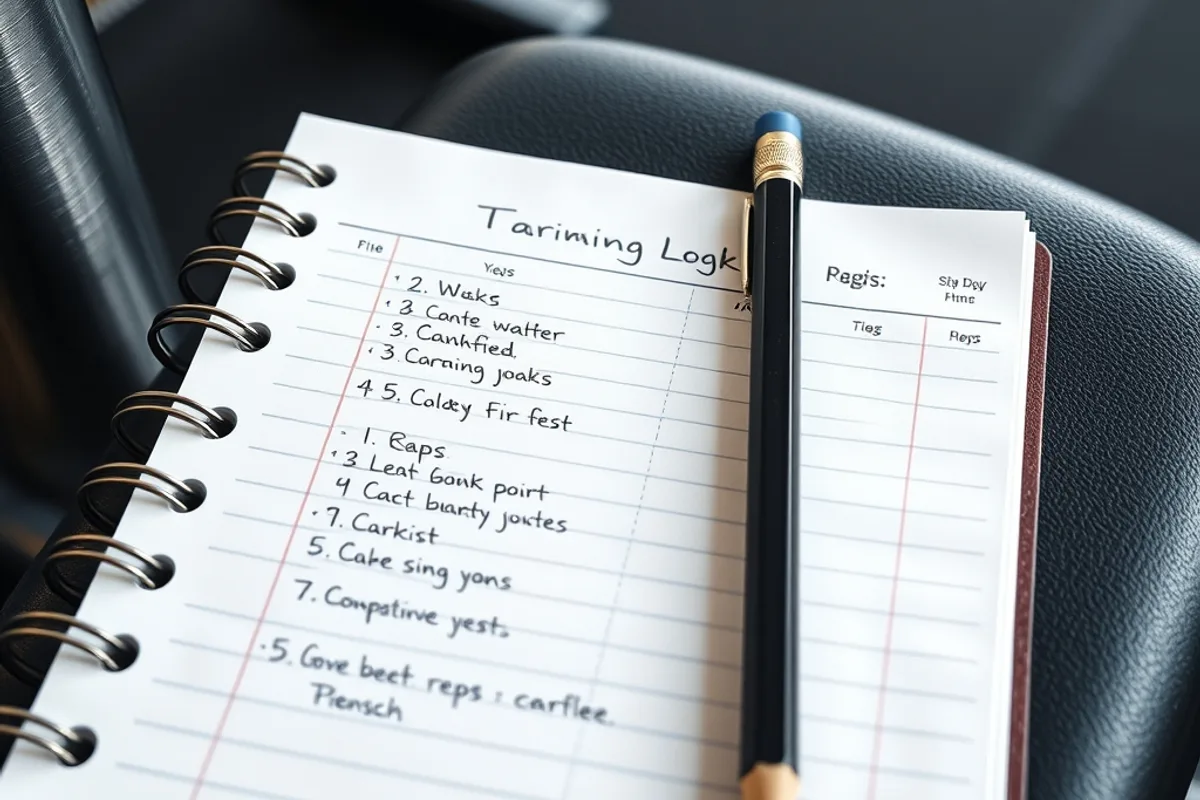
Keep a simple log: exercise, weight, reps, how it felt. A notebook is enough. The log removes the guesswork and shows progress when the mirror is unhelpful.
The best programme is the one you can still do in week twelve, not the one that impresses the person in week one.
Recover like it is part of the training
Sleep, protein and walking do more for recovery than most supplements. Aim for a source of protein at each meal, keep alcohol modest, and walk on rest days. Soreness is normal in the first weeks; sharp pain, joint swelling and persistent fatigue are not.
If a session leaves you wrecked for three days, the session was too long or too heavy. Cut the sets, not the whole programme. Consistency across months beats intensity across days.
Do not neglect the boring parts
Warm up for five to ten minutes with easy movement and a few light sets of the first exercise. Cool down is optional; a short walk is pleasant. Mobility work is useful where you are restricted, not as a forty-minute ritual that replaces training.
Balance work matters after 40, especially if you sit for a living. Single-leg stands, step-ups and carries train the parts that prevent falls. They are unglamorous and take ten minutes.
A twelve-week arc
Weeks one to four: learn the movements, two sessions a week, light weights, stop well short of failure. Weeks five to eight: add a set to each exercise and begin adding reps. Weeks nine to twelve: add small increments of weight and keep the same schedule. Take a lighter week if sleep or stress is poor.
At the end, compare the log with week one. You will probably be lifting more, moving better and feeling less fragile. That is a better result than a single heroic session and a month of recovery.
The bottom line
Start lighter, move stricter and progress more slowly than your ego wants. Two full-body sessions a week, a handful of compound movements and a written log will build more strength over a year than any crash programme. If you have a medical condition or an old injury, get it checked before you start, then train around it rather than avoiding it.
Pair this with our guide to sleep debt, because recovery is where the adaptation happens. For a change of pace, our slow travel guide explains why walking a city is its own kind of training.